Download the HPLC Calculator App: The Ultimate HPLC Analysis Tool
Your expert companion for HPLC method development, liquid chromatography troubleshooting, and calculating parameters for both RP-HPLC and UPLC systems.
Get instant access to advanced HPLC calculations and community support


Questions

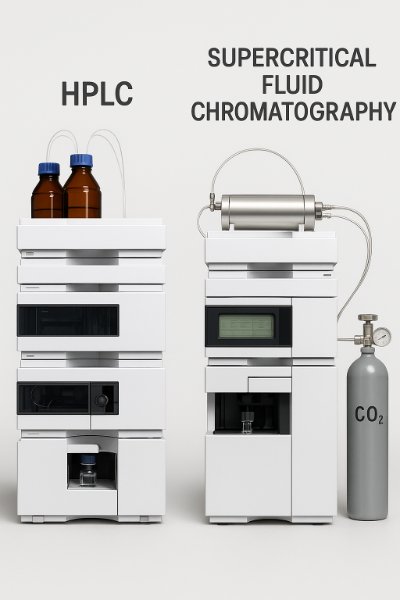
Supercritical Fluid Chromatography (SFC) often takes center stage as a “green” technique, thanks to its use of supercritical CO₂. But let’s be honest — sustainability is more than just one solvent. It’s about the full picture: solvent usage, energy demands, waste, and recovery systems. Here's a grounded view ?
✅ Where SFC Supports Green Chemistry
♻️ CO₂ as main mobile phase → reduces organic solvent usage
⚡ Faster runs → lower energy + higher throughput
Lower toxicity & flammability than fully organic systems
Great for chiral & non-polar compounds — when properly optimized
⚠️ Where SFC May Miss the Mark
High co-solvent use (≥45–50%) undermines the green edge
No co-solvent recovery = more waste + more cost
CO₂ often vented instead of recycled — less sustainable
High flow rates in prep mode → excessive consumption unless carefully managed
Recovery & Recycling: The Real Green Commitment
To truly make SFC (or even HPLC) green, recovery systems are essential:
Co-Solvent Recovery
♻️ Reclaim methanol/ethanol to cut waste and costs
Key for both environmental compliance and sustainability
CO₂ Recycling
Closed-loop systems compress, clean, and reuse CO₂
Reduces emissions and supports a circular chromatography model
❗Without recovery, “green SFC” is more illusion than reality.
Sustainable Method Development: Start Smart
✅ Keep modifiers ≤25% when possible
Begin scouting with biodegradable solvents
Use gradient delays to minimize early CO₂ loss
Choose the right column to avoid repeat runs
Optimize the whole process — not just speed or selectivity
SFC vs. HPLC? No Rivalry, Just the Right Tool
Base your method on your mission:
Compound polarity & complexity
Availability of recovery systems
⏱️ Throughput needs
Sustainability goals
A data-driven approach ensures both performance and environmental responsibility ??
SFC’s Strengths — When Recovery Is In Place
Ultra-fast separations
Reduced solvent waste
Effective for chiral purification
CO₂ = cheap, inert, recyclable
Safer than all-organic setups
Final Note:
These insights are derived from real-world experience in method development across analytical and preparative-scale chromatography. I’m not pushing any one platform — just opening the door for honest, practical dialogue.
What’s your perspective on SFC in green science?
Are you integrating recovery systems? Let’s share, improve, and grow together. ?
No answers yet.
Mobile App
Get the app for mobile access