Download the HPLC Calculator App: The Ultimate HPLC Analysis Tool
Your expert companion for HPLC method development, liquid chromatography troubleshooting, and calculating parameters for both RP-HPLC and UPLC systems.
Get instant access to advanced HPLC calculations and community support


Questions

Understanding chromatographic resolution (Rs) is crucial for accurate analysis! ? Watch how two overlapping peaks separate to achieve baseline resolution. Rs is a measure of the separation between two peaks relative to their widths (W1 and W2). Clear separation means reliable data! ?
#HPLC #Chemistry #Chromatography #ScienceEducation
No answers yet.

One of the most important choices in chromatography method development is deciding between Normal-Phase (NP) and Reversed-Phase (RP) HPLC. The following comparison outlines the main differences:
Normal-Phase HPLC
The stationary phase is more polar than the mobile phase.
Common column types include Silica, Amino (NH2), Diol, and Cyano (CN).
The mobile phase usually consists of non-polar solvents such as hexane or ethyl acetate.
Polar compounds are retained for a longer time.
Reversed-Phase HPLC
The stationary phase is less polar than the mobile phase.
Typical columns include ODS (C18), C8, C4, Phenyl, and Cyano (CN).
The mobile phase often contains polar solvents such as water or acetonitrile.
Non-polar compounds are retained for a longer time.
The retention order of analytes is essentially reversed when switching between NP and RP systems—this principle lies at the core of chromatographic separation.
Choosing the appropriate phase depends on factors such as analyte polarity, sample solubility, and the desired separation outcome.
#HPLC #Chromatography #AnalyticalChemistry #Pharmaceuticals #PharmaIndustry #DrugDevelopment #SeparationScience #ResearchAndDevelopment #LabWork #QualityControl #QC #MethodDevelopment #AnalyticalMethods #Biopharma #ChemicalAnalysis #PharmaResearch #ChromatographicSeparation
No answers yet.
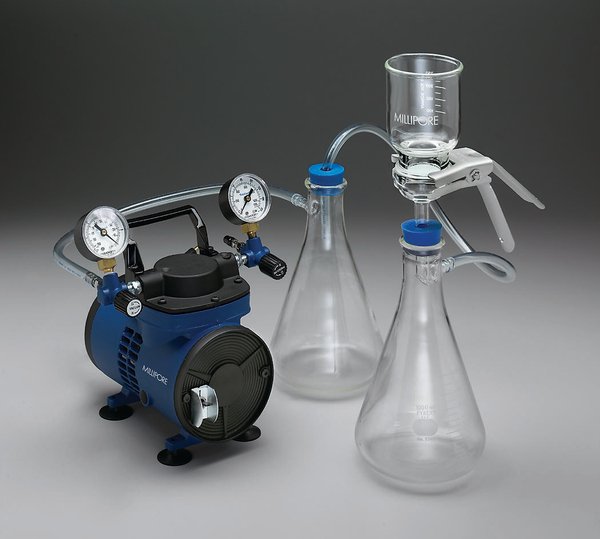
In chromatography, purity begins before the first injection.
One of the most overlooked yet critical steps is the filtration of buffer solutions used in the mobile phase.
Why is it important?
Removes particulate matter: Prevents column blockage, protects pump seals, and extends instrument life.
Enhances baseline stability: Eliminates micro-particles that can cause noise or ghost peaks.
Improves reproducibility: Ensures consistent flow rates and separation efficiency.
Ideal Filter Papers for Buffer Filtration
When filtering aqueous buffer solutions, it’s crucial to use the right membrane to avoid leaching or chemical incompatibility. Common choices:
Nylon (0.45 µm or 0.2 µm) – Excellent for most aqueous buffers; low extractables.
PTFE (0.45 µm or 0.2 µm) – Best for organic solvent compatibility; hydrophobic but can be pre-wetted for aqueous use.
Cellulose Nitrate / Cellulose Acetate (0.45 µm) – Low protein binding, suitable for biological samples.
Glass Fiber Pre-filters – Ideal for high-particulate buffers before membrane filtration.
Best Practice Tip: Always degas after filtration to prevent bubble formation inside the filter and ensure a smooth mobile phase flow.
#Chromatography #HPLC #AnalyticalChemistry #QualityControl #LabBestPractices #PharmaIndustry #ResearchAndDevelopment #BufferSolution #MobilePhase #Filtration hashtag#MethodDevelopment #LaboratoryTips #PharmaManufacturing #AnalyticalScience
No answers yet.

Whether you're just getting started or refreshing your skills in High-Performance Liquid Chromatography (HPLC), mastering a few key terms can make a big difference. Let's break down three of the most important ones:
Retention Factor (k′)
This tells you how long a compound stays on the column relative to the mobile phase (void time).
Formula: k′ = (tR – t0) / t0
➡️ A higher k′ means stronger interaction with the stationary phase.
Capacity Factor
Also known as the Retention Factor!
✅ It reflects how well the column retains your compound.
Pro Tip: An ideal k′ falls between 1 and 10 for efficient separation.
Resolution (Rs)
This measures how distinctly two peaks are separated on the chromatogram.
Formula: Rs = 2 (tR2 – tR1) / (W1 + W2)
✔️ Rs ≥ 1.5 indicates clear, baseline separation.
Why It Matters:
These metrics help you fine-tune your method for sharper peaks, shorter runtimes, and more reliable results.
✨ Ready to level up your HPLC skills?
Got a go-to trick for improving resolution? Share it below! ?
No answers yet.
Mobile App
Get the app for mobile access