Download the HPLC Calculator App: The Ultimate HPLC Analysis Tool

Your expert companion for HPLC method development, liquid chromatography troubleshooting, and calculating parameters for both RP-HPLC and UPLC systems.

Get instant access to advanced HPLC calculations and community support

113
Questions Asked
72
Answers Given
522
Community Members
0
Questions Today
Questions
Author avatar
1 year ago
Question image

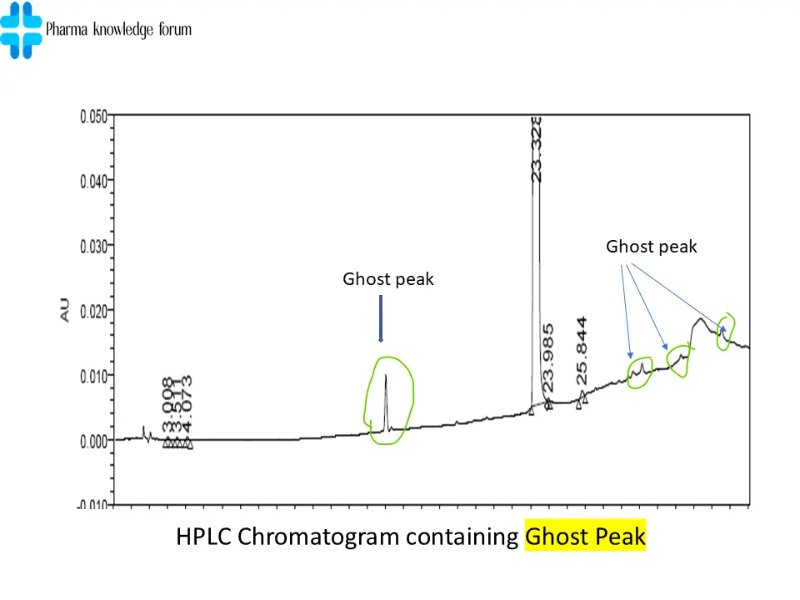
While running a long sequence, I started seeing ghost peaks appear randomly in blanks and sometimes in unrelated samples.

At first, I thought it was carryover, but after thorough needle washes and even changing vials, the issue persisted. I eventually traced it back to mobile phase contamination. I had reused an old acetonitrile bottle and later realized it had absorbed impurities from the environment.

Switching to freshly opened solvent bottles solved the issue. Now I always label solvent bottles with opening dates and discard them regularly.

280 views
Avatar youhana Hosny 11 m ago

great :)

👍 0 | 👎 0
Avatar
user_1764925856103 11 m ago
:)

Frequently Asked Questions: HPLC Analysis & Chromatography

High-Performance Liquid Chromatography (HPLC) is an analytical technique used to separate, identify, and quantify each component in a mixture. It relies on a pump to pass a pressurized liquid solvent containing the sample mixture through a column filled with a solid adsorbent material. Each component in the sample interacts slightly differently with the adsorbent material, causing different flow rates for the different components and leading to the separation of the components as they flow out of the column.

Column efficiency is typically measured by the number of Theoretical Plates ($N$). The most common formula is $N = 16 \times (t_r / W)^2$, where $t_r$ is the retention time and $W$ is the peak width at the base. A higher number of theoretical plates indicates a sharper peak and better analytical separation. You can calculate this instantly using our Theoretical Plates Calculator.

The ICH (International Council for Harmonisation) Q2(R1) guidelines mandate specific validation parameters for HPLC methods. These include assessing Accuracy, Precision (Repeatability and Intermediate Precision), Specificity, Detection Limit (LOD), Quantitation Limit (LOQ), Linearity, and Range. Our calculators are designed specifically to help analysts easily compute these linearity, LOD/LOQ, and %RSD parameters in compliance with ICH standards.
Popular Search Trends & Keywords
HPLC Calculator Agilent HPLC metrics HPLC detector (DAD/UV) HPLC MS analysis HPLC pump pressure RP-HPLC parameters Chromatography principles UPLC method scaling Hb HPLC method Liquid chromatography tools