Download the HPLC Calculator App: The Ultimate HPLC Analysis Tool
Your expert companion for HPLC method development, liquid chromatography troubleshooting, and calculating parameters for both RP-HPLC and UPLC systems.
Get instant access to advanced HPLC calculations and community support


Questions

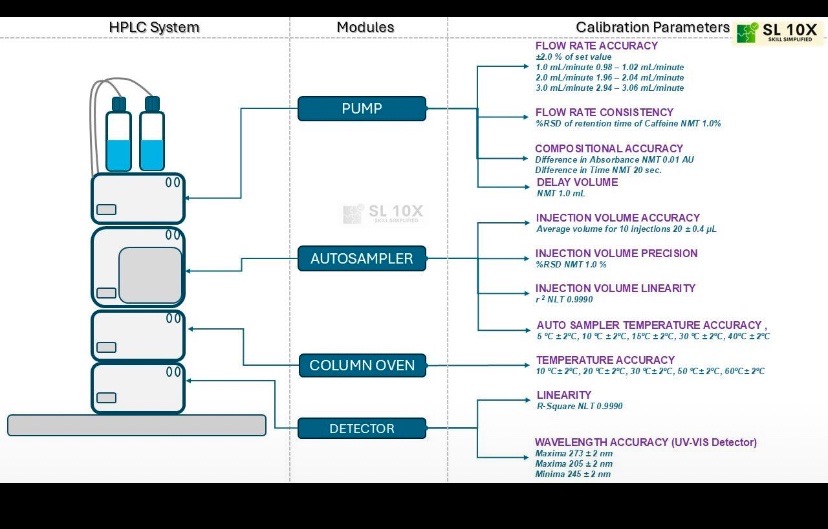
High-Performance Liquid Chromatography (HPLC) is more than just a tool — it's the backbone of accurate pharmaceutical testing. But without proper calibration, even the best system can lead you astray. Here's why calibration matters, and how to do it right.
Why HPLC Calibration Is a Must
Trust Your Data
Imagine spending hours running tests—only to realize your results are off. Calibration ensures your data is accurate and consistent, every single time.
Stay on the Right Side of Regulations
The FDA and EMA aren’t just suggesting calibration—they require it. Validated, calibrated systems are a must for passing audits and staying compliant.
Protect Product Quality
In pharma, quality is everything. Calibration helps you avoid unexpected errors that could compromise patient safety and company reputation.
What Needs to Be Calibrated?
Pump Calibration
Flow Rate Accuracy: Use a certified flow meter to check that your flow rate matches the set value.
Pressure Consistency: Keep an eye on system pressure—unexpected changes might signal deeper issues.
Detector Calibration
Wavelength Accuracy: Verify with standard calibration filters to ensure your detector is locked onto the correct wavelength.
Linearity Check: Confirm your detector’s response is proportional across different concentrations. No surprises, no drifts.
Column Performance
Efficiency & Resolution: Use standard mixtures to check that your column is still separating compounds like a champ.
System Suitability Tests
Before running samples, confirm everything’s working as it should: retention time, peak area, theoretical plates, and more.
Best Practices to Keep Things Running Smoothly
Routine Maintenance = Peace of Mind
Don’t wait for a breakdown. Regular servicing keeps your system—and your confidence—running strong.
Use Certified Standards
Accuracy starts with the right tools. Always rely on certified reference materials for calibration.
Document Everything
Keep a detailed log of every calibration. If something goes wrong, you’ll have a clear trail to track it down.
Train Like It Matters (Because It Does)
A well-trained team is your first line of defense. Make sure everyone handling calibration knows what they’re doing—and why it matters.
 user_1764925856103
1 year ago
user_1764925856103
1 year ago
great :)
Mobile App
Get the app for mobile access


